
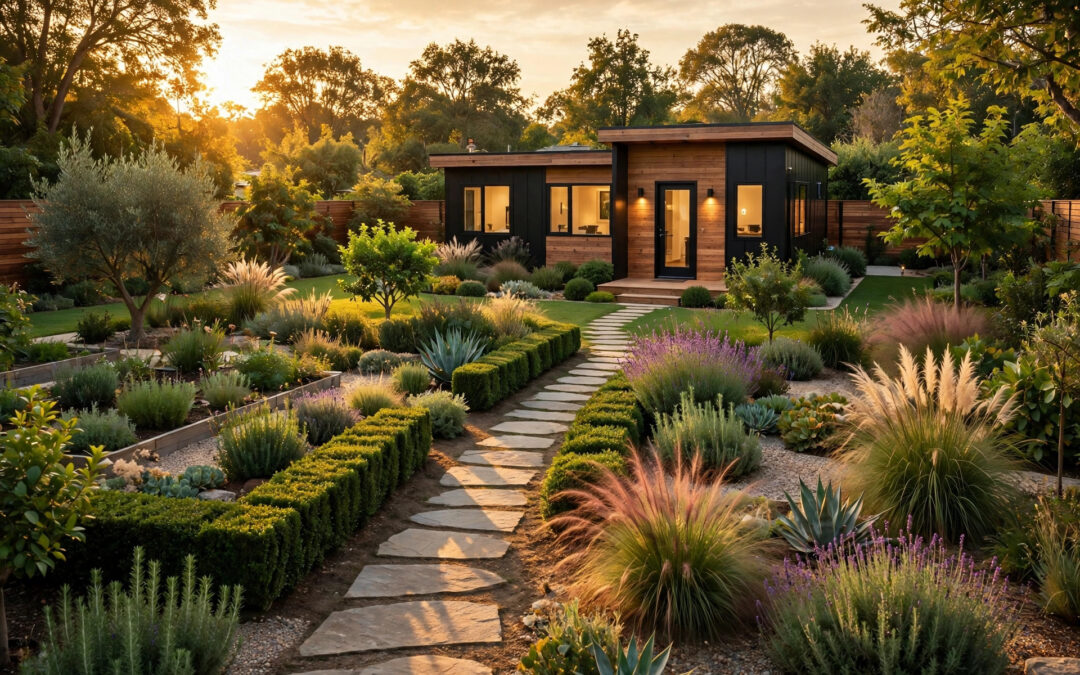
One of the first decisions Banning homeowners face when planning an accessory dwelling unit is whether to build detached or attached. Both are common across the Inland Empire, and the right answer depends on your lot, your budget, and how you plan to use the space. Here is how the two layouts compare for Banning properties — and how our team helps you decide.
What a detached ADU gives you
A detached ADU is a freestanding cottage in your backyard, separated from your main home by open space. Detached units tend to offer the most privacy, which matters if the unit will house a renter, an aging parent, or an adult child. They also give you more design freedom: you can match or contrast your main home's architecture, add a private patio or entry path, and place windows without worrying about shared walls.
Detached ADUs usually cost more than attached ones because every wall is exterior, and you are building a full foundation, roof, and utility connections from scratch. But that independence often pays off in rental value and resale appeal.
What an attached ADU gives you
An attached ADU shares at least one wall with your main house. Many Banning homes already have a natural starting point for one — an attached garage, a side patio, or an existing wing of the house that can be converted or extended. Because you are tying into the existing structure, attached ADUs typically cost less to build and connect to utilities more simply.
The trade-offs are privacy and light. Shared walls mean shared noise, and window placement is limited to the sides that face away from the main house. For multigenerational living, though, the closeness can be a feature: grandparents and grandkids within easy reach while everyone keeps their own space.
How your lot decides
Banning lots are often generous by Southern California standards, which gives many homeowners the room for either option. Still, a few site realities shape the choice:
- Setbacks and open space. Detached units need enough backyard depth to meet side and rear setbacks and still leave usable yard. On narrower lots, an attached unit over or beside the garage may be the practical answer.
- Access. A detached ADU works best with a clear path from the street or alley to the unit — fire access and privacy both matter. Attached units simply use your existing entry.
- Terrain. Banning has pockets of sloping ground, especially toward the hills. Slopes complicate detached construction but can sometimes make an attached unit over a garage or basement the easier build.
The permitting difference
Local rules treat detached and attached ADUs similarly in most respects — size limits, height caps, and parking rules often apply to both. That said, the details vary by city, and Banning is no exception. Our team handles the research, plans, and permit coordination either way, so you are never left guessing which rules apply to your lot.
Which one should you pick?
If privacy and rental income are the goals, detached usually wins. If budget and convenience matter most — especially with a garage that is begging to be converted — attached is the smart play. Either way, the decision should follow a real look at your lot, not a guess from a brochure.
Let us walk your lot with you
Our Banning ADU team will visit your property, measure what is possible, and give you an honest read on detached versus attached for your specific lot. Call ADU Cities at 310.880.9718 to schedule your free consultation.